Phone answered 24/7
Sewer Line Repair in Everett, WA
The side sewer, the pipe running from your house to the public sewer main, is one of those things nobody thinks about until it fails. When it does, it tends to fail all at once: a backup, standing water in the yard, or a sewer smell that won't go away. For sewer line repair in Everett, WA, call (425) 845-0233 and we'll connect you with a local plumber who can inspect and repair the line.
Signs your side sewer needs attention
A single slow drain is usually a fixture-level clog. A side sewer problem tends to show up differently: multiple drains backing up around the same time, gurgling from toilets when you run the washing machine, a soggy or unusually green patch of lawn along where the line runs, or a sewage smell in the yard or basement. Water backing up into the lowest drain in the house first, often a basement floor drain, is a classic sign the blockage or damage is in the main line rather than a branch. If the only sign is a high water bill or a damp spot with every drain running fine, that points to a supply-side leak instead, and our leak detection page covers how a plumber tracks one down.
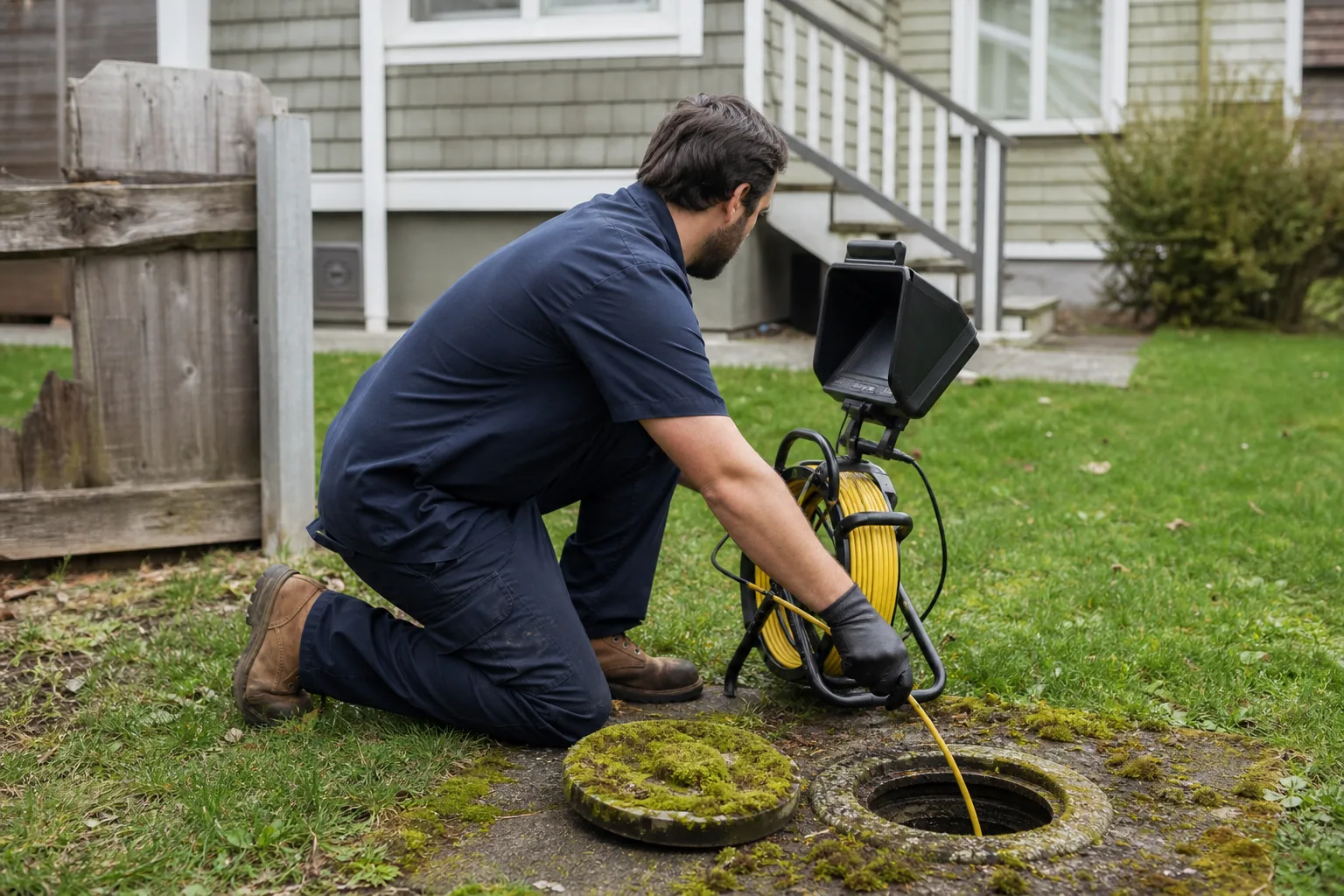
What causes side sewer failures around Everett
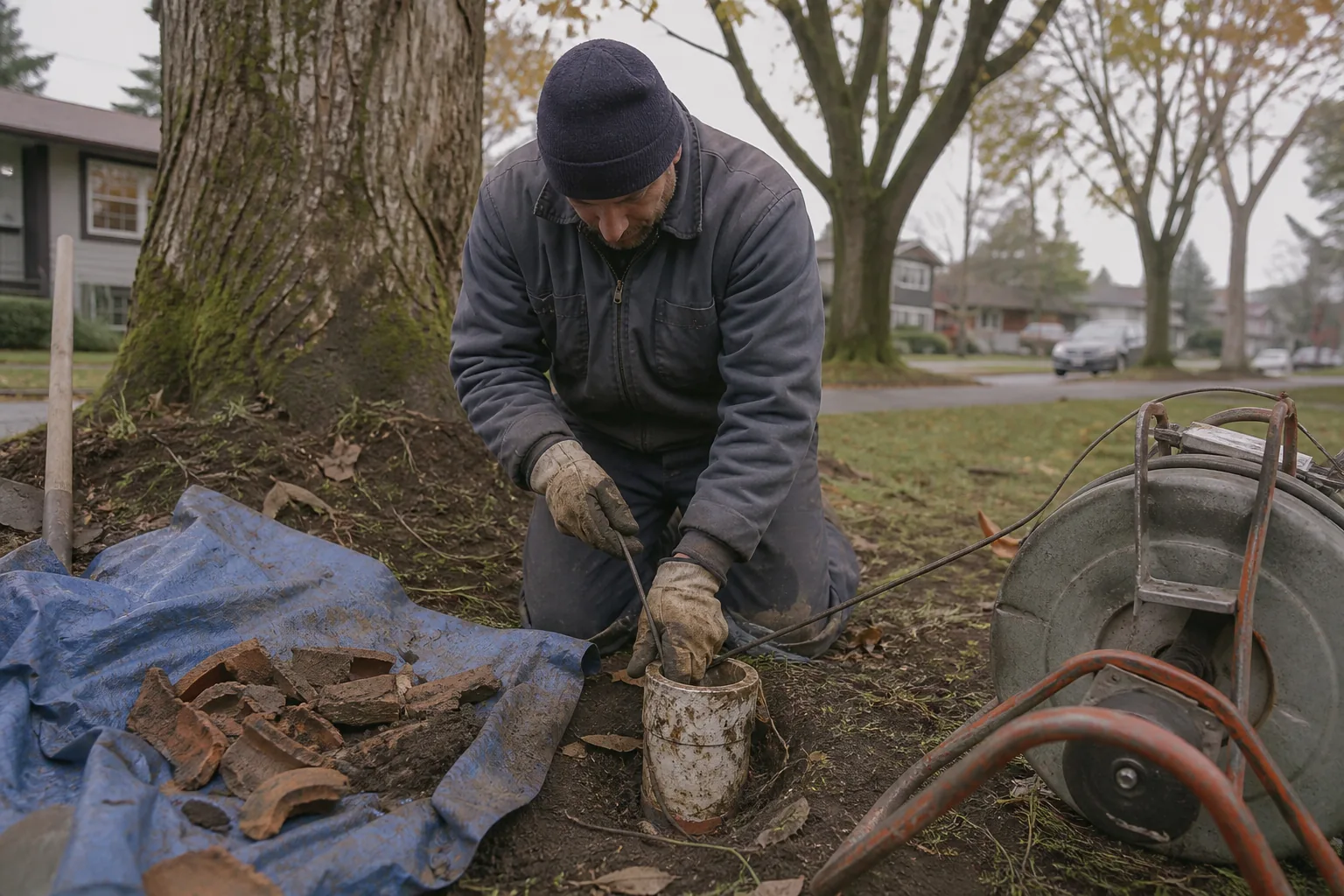
Root intrusion is the most common cause in this area, particularly in older neighborhoods with mature trees. Roots work their way in through joint gaps or small cracks and grow into thick mats that catch debris and eventually block the line entirely. Homes in Northwest Everett, Bayside, and other pre-1950 neighborhoods often still have original cast iron or clay tile sewer lines, both of which are more prone to joint separation, root intrusion, and in cast iron's case, interior corrosion that narrows the pipe over decades.
Older Orangeburg pipe, a tar-paper composite material used in parts of the mid-20th century, is another one worth knowing about if your home dates to that era; it's known to deform and collapse over time regardless of tree roots. A belly, a section of pipe that has sagged and holds standing water and waste instead of draining freely, is another common issue in older or settled ground, and it tends to cause recurring, slow-building clogs rather than a sudden blockage.
Not sure if it can wait?
Describe what you're seeing and we'll connect you with a local plumber who can tell you how urgent it is.
Camera inspection: seeing the problem before fixing it
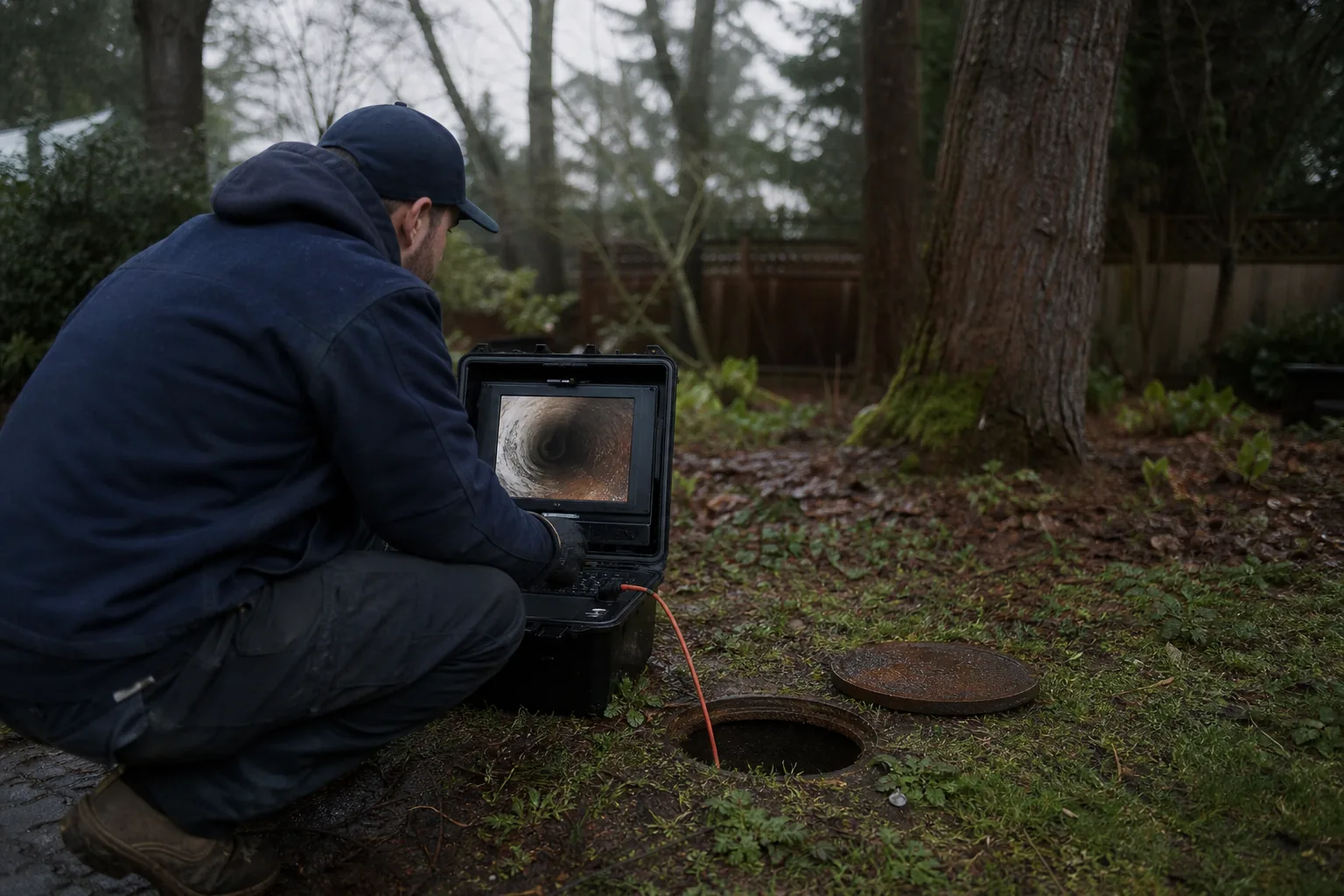
Before recommending a repair method, a plumber will typically run a camera down the line through a cleanout. This shows the pipe material, its condition, where any breaks or root intrusion are located, and whether the damage is isolated to one section or spread along the run. A camera inspection is also useful evidence if you're buying a home with an older side sewer, or if the city has flagged an issue during a separate inspection.
Trenchless options: lining, bursting, or open trench
Once the plumber knows what's actually wrong with the line, there are generally three ways to fix it, and which one fits depends on the pipe's condition, material, and location.
Pipe lining involves inserting a resin-saturated liner into the existing pipe and curing it in place, creating a new pipe within the old one. It works well when the existing pipe still has a stable shape and mainly needs to seal cracks, joints, and root entry points. It generally doesn't require digging up the yard or driveway, which is its main appeal.
Pipe bursting replaces the line by pulling a new pipe through the old one while a bursting head fractures the old pipe outward. It's used when the old pipe is too damaged, collapsed, or undersized for lining to work, but the ground above still doesn't need to be fully excavated.
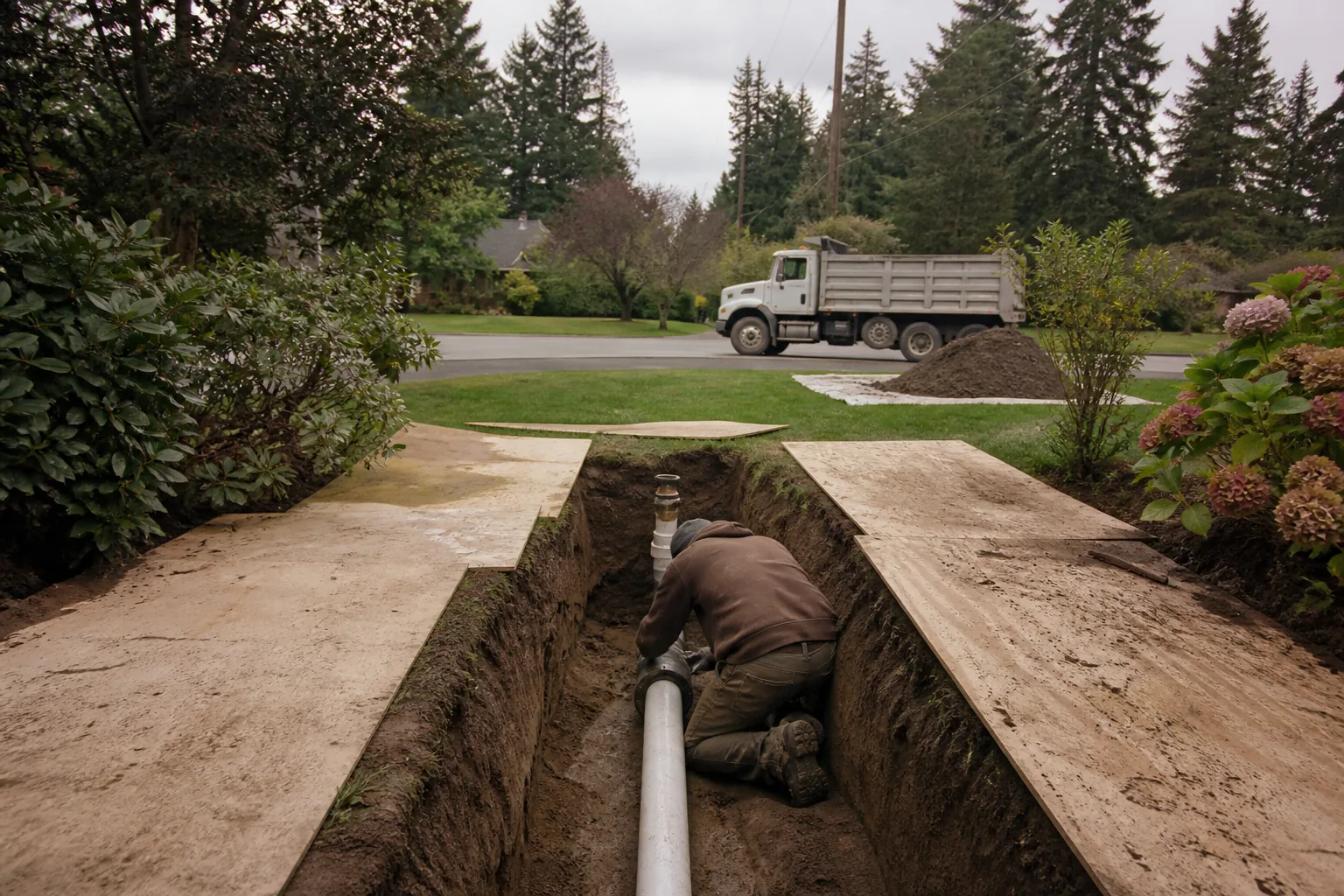
Open trench replacement means digging up the section of yard, driveway, or landscaping above the pipe and replacing it directly. It's still the right call when the line has a severe belly that needs to be corrected (something trenchless methods can't fix, since they follow the existing path), when there are multiple separate failure points, or when access for trenchless equipment isn't possible.
Talk it through with a plumber
The line is answered 24/7. Tell us your neighborhood or city and what's going on.
Permits and who owns the line
In most cities, including Everett, the homeowner owns and is responsible for the side sewer from the house to the public main, and replacing or significantly repairing it generally needs a permit. Ask the plumber whether your job needs one and who's pulling it. It's also worth reading more about typical sewer line replacement costs in Snohomish County if you're trying to get a sense of scope before the plumber's estimate arrives, and our guide on what to do during a main sewer line backup if you're dealing with an active backup right now. Pre-1950 houses that still have original cast iron or clay sewer lines often have galvanized supply pipe too, and whole-house repiping covers that side of the system.
Before the plumber gets there
- Stop using all drains in the house if you suspect a main line issue
- Avoid running the washing machine or dishwasher until it's inspected
- Keep kids and pets away from any standing water in the yard or basement
- Note where you've seen soggy ground, smells, or slow drains, it helps narrow down the location
- Locate your sewer cleanout if you know where it is on the property
How calling works
Call and describe the problem
Tell us what's leaking, clogged or not working, and roughly where you are in Everett or which nearby city.
We connect you with a local plumber
Your call goes to an independent plumbing contractor who works your area and handles that kind of job.
The plumber takes it from there
They talk through the problem, timing and price with you. Ask for a written estimate before work starts.
Where this service is available
One call to our Everett plumber line gets you help with your sewer line across the city and these nearby areas. Pick yours for local details.
Everett neighborhoods
Common questions
How much does sewer line repair cost in Everett?
It varies widely depending on whether the fix is lining, bursting, or open trench, the length and depth of the line, and access to the property. Get a written estimate from the plumber after the camera inspection, and see our page on sewer line replacement costs in Snohomish County for a rough sense of ranges.
Is trenchless sewer repair always possible?
No. Trenchless methods work well for cracks, root intrusion, and joint failures, but a severely bellied line, multiple disconnected sections, or very poor access can require open trench work instead. The camera inspection is what determines which option actually fits.
Do I need a permit to replace my side sewer?
In most cases yes, since the homeowner owns the side sewer and replacing it typically requires a permit from the city. Ask the plumber whether your specific job needs one and who's responsible for pulling it.
How do I know if tree roots are the problem?
A camera inspection is the most reliable way to confirm it, since roots are visible clearly on camera as they enter through pipe joints. Recurring clogs in the same area, especially near mature trees, are a common indicator worth checking.
What's a belly in a sewer line?
It's a section of pipe that has sagged, usually from settled ground, so waste and water pool there instead of flowing downhill. It causes recurring, slow-building clogs and typically needs the sagged section dug up and corrected rather than lined.
How can I check that the plumber is properly registered?
Washington requires plumbing contractors to be registered with the Department of Labor & Industries and plumbers to hold an L&I plumbing certificate. Ask for the registration number and look it up on L&I's Verify a Contractor tool.
Question not covered here? Describe the problem on the phone.
Call (425) 845-0233Related plumbing problems
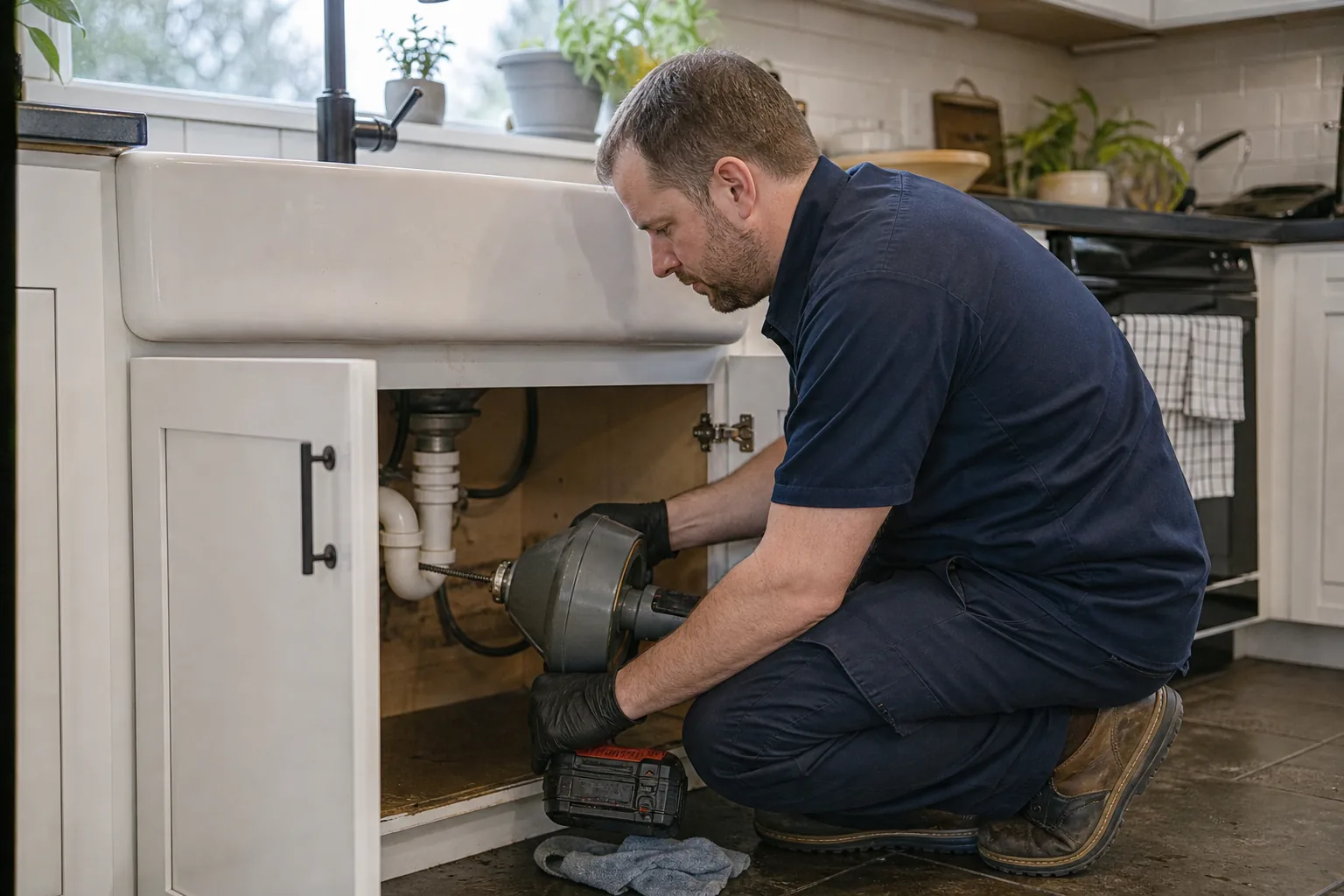
Drain Cleaning & Hydro Jetting
Kitchen sink backing up, a slow tub drain, or a main line clog. Call and we'll connect you with a local plumber.
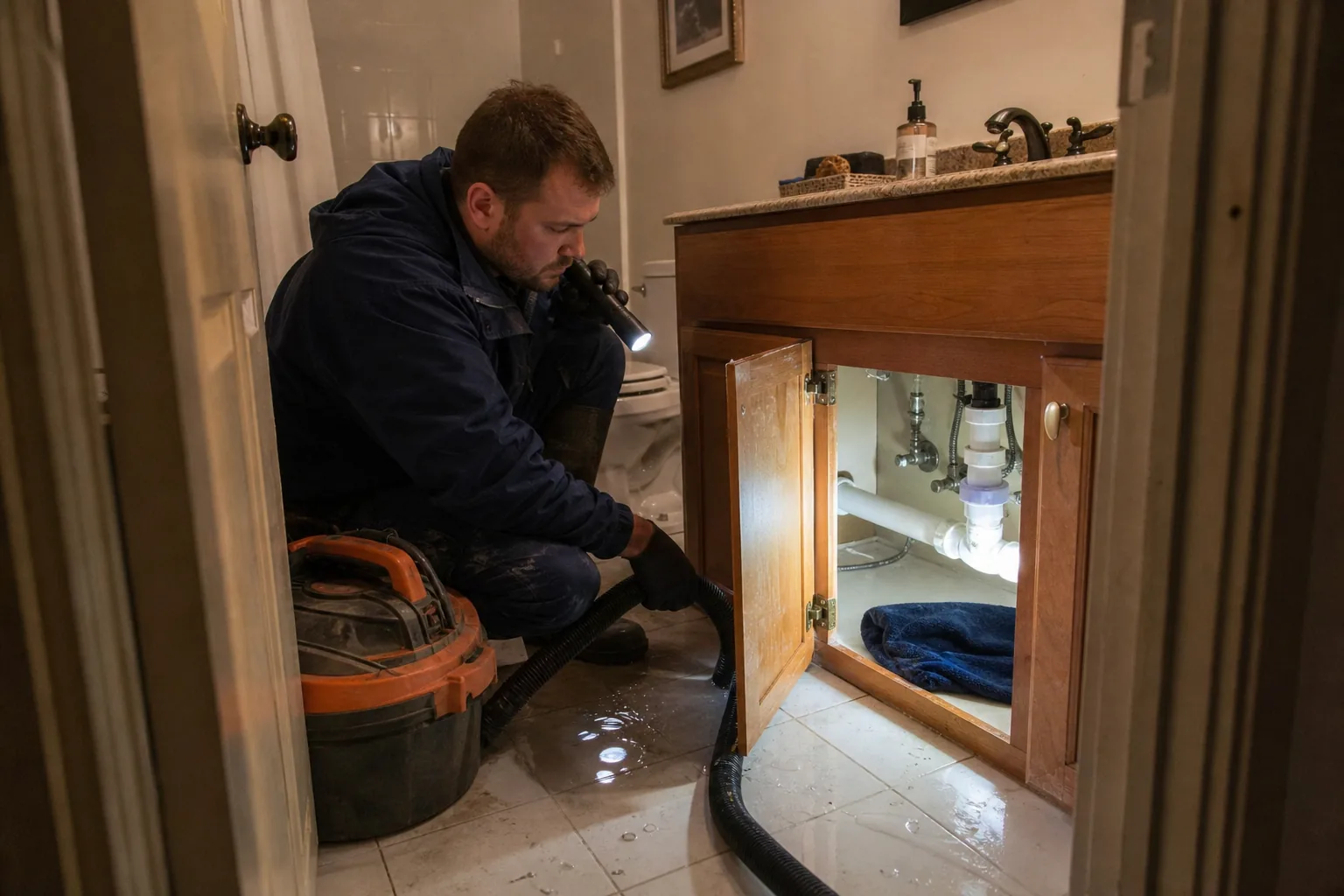
24/7 Emergency Plumbing
Burst pipe, sewage backup, or no water at all. Call any time, day or night, and we'll connect you with a local plumber.
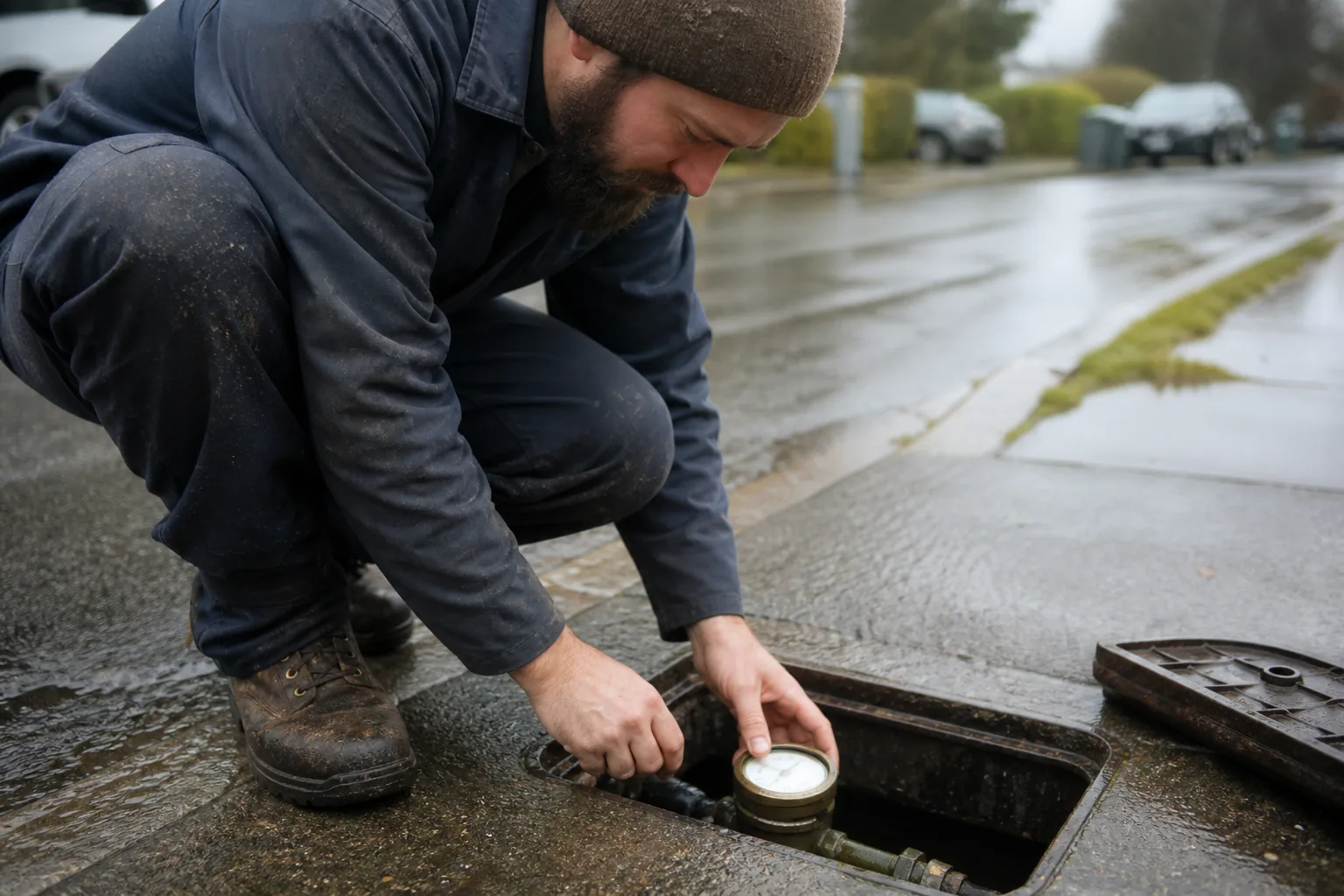
Water Line Repair & Replacement
Low pressure, a wet spot in the yard, or a meter that spins with everything off. Get connected with a plumber for your service line.
Call any time
Get the line inspected
Call (425) 845-0233 and describe what you're seeing, backups, smells, or soggy ground. We'll connect you with a local plumber who can camera the line and walk you through the repair options.
Call (425) 845-0233Calls are connected to independent local plumbing contractors.