Phone answered 24/7
Water Heater Repair in Everett, WA
If you're dealing with water heater repair in Everett, WA, chances are it's because the shower went cold halfway through, or you walked past the water heater closet and found a puddle on the floor. Either way, call (425) 845-0233. We'll ask what's going on and connect you with a local plumber who works on tank and tankless units in your area.
This page covers the common failures and what a plumber will likely check first.
Call right away if
- Water is pooling under or around the tank
- You smell gas near the unit
- The tank is making a loud popping or rumbling sound
- The T&P valve is discharging water on its own
- Water coming from the tank is scalding hot with no way to adjust it
- There's water damage spreading to a nearby wall or ceiling
No hot water at all
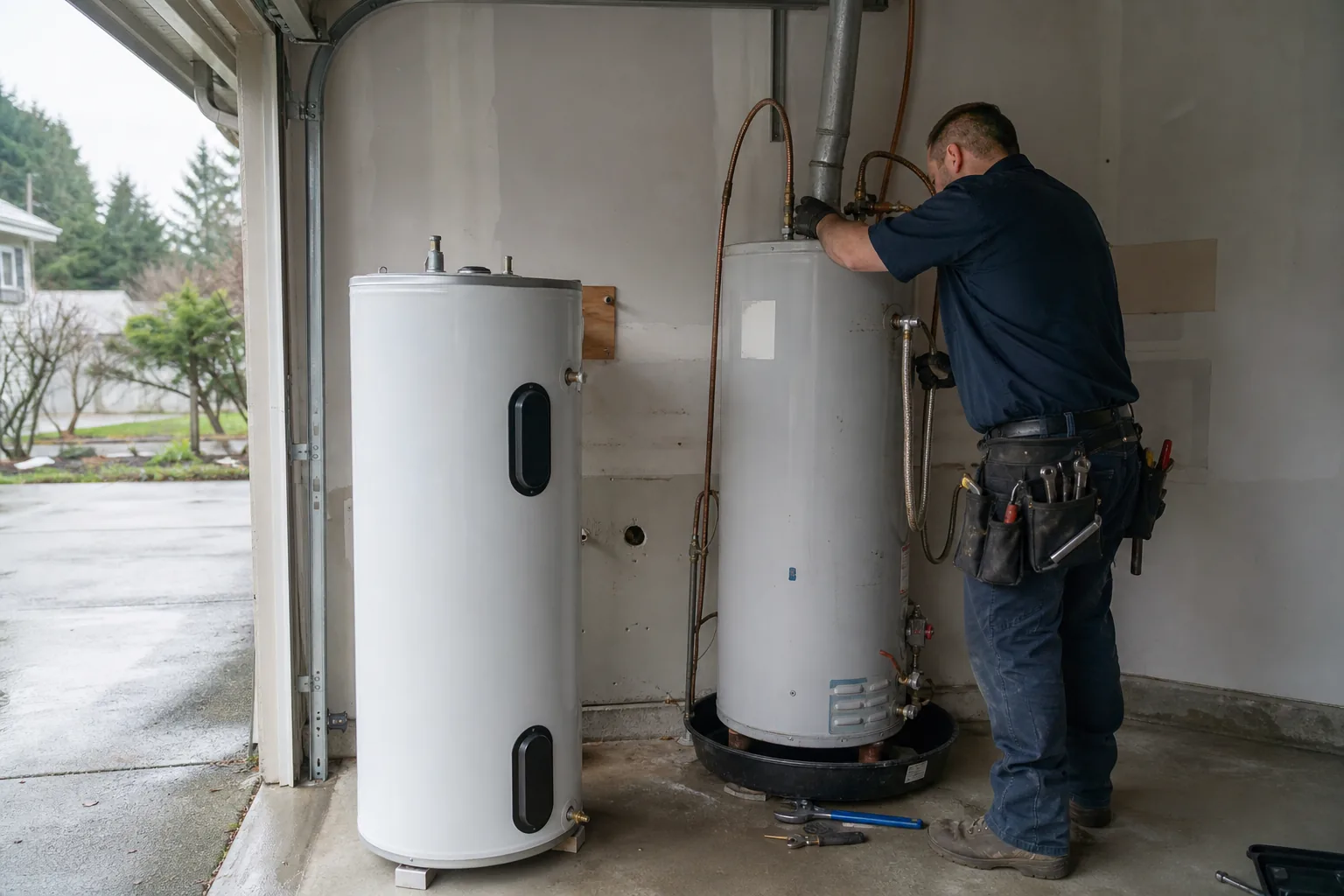
This is the most common call. On a gas unit, the pilot light may have gone out, or the thermocouple (the small sensor that proves the pilot is lit) has failed and is shutting off gas flow as a safety measure. On an electric unit, a tripped high-limit switch or a burned-out heating element is the usual suspect. If the pilot won't stay lit after you relight it once, or the breaker trips again after you reset it, that's a part failure, not user error.
A plumber will typically test the thermocouple, gas valve, or heating elements with a multimeter before replacing anything, rather than swapping parts one at a time and hoping.
Hot water that runs out fast or isn't hot enough
If a shower that used to last fifteen minutes now goes cold in five, sediment buildup on the bottom of the tank is a likely cause, especially on an older unit that's never been flushed. Sediment insulates the water from the burner or lower element, so the tank works harder and holds less usable hot water. A failing dip tube (the pipe that sends cold water to the bottom of the tank so it can be heated) can also cause lukewarm water, because cold water mixes in near the top outlet instead.
On a tankless water heater, inconsistent temperature is often flow rate or scaling related rather than a straightforward failure. Everett's water is naturally soft, which actually helps here. Tankless units in this area tend to scale up slower than in hard-water regions, but they're not immune, especially with an older unit that's never been descaled.
Not sure if it can wait?
Describe what you're seeing and we'll connect you with a local plumber who can tell you how urgent it is.
Leaking from the tank
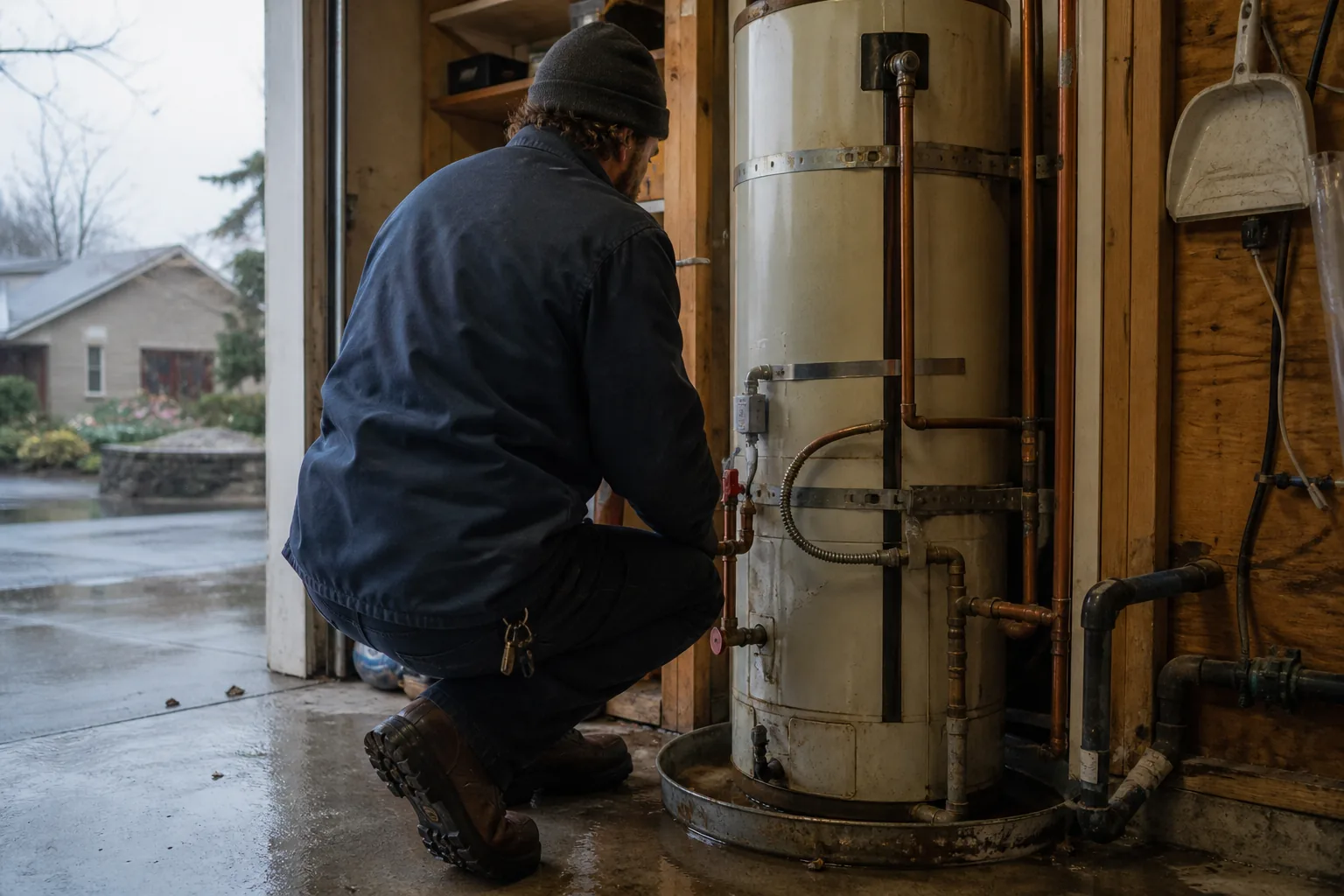
Where the water is coming from matters. A leak from a fitting at the top, like the cold inlet or hot outlet connection, or from the T&P (temperature and pressure) valve, is often a part that can be repaired or replaced without touching the tank itself. A leak from the bottom of the tank, or rust colored water pooling underneath, usually means the tank itself has corroded through. That's not repairable. Once a steel tank rusts through, it needs to be replaced.
An anode rod inside the tank is designed to corrode instead of the tank walls. On an older unit that's never had the anode rod checked, that rod may be long gone, which speeds up how fast the tank itself starts to fail.
How a plumber decides repair versus replacement
Age is the first thing that gets checked. Most tank water heaters last 8 to 12 years; a unit already past that range that's showing a real fault, like a tank leak or a failed lower element on an old tank, usually isn't worth repairing. A newer unit with a single failed part, like a thermocouple, gas valve, or heating element, is usually a straightforward repair.
The second factor is where the failure is. A part failure (thermocouple, element, valve) is repairable. A tank failure (rust-through, cracked tank) is not. A plumber will look at the age, the location of the leak, and whether the unit still meets current code if it were left in place, before recommending one path or the other. Ask for a written estimate either way, and ask what the plumber found that led to that recommendation.
Talk it through with a plumber
The line is answered 24/7. Tell us your neighborhood or city and what's going on.
Water heater replacement and installation in Everett
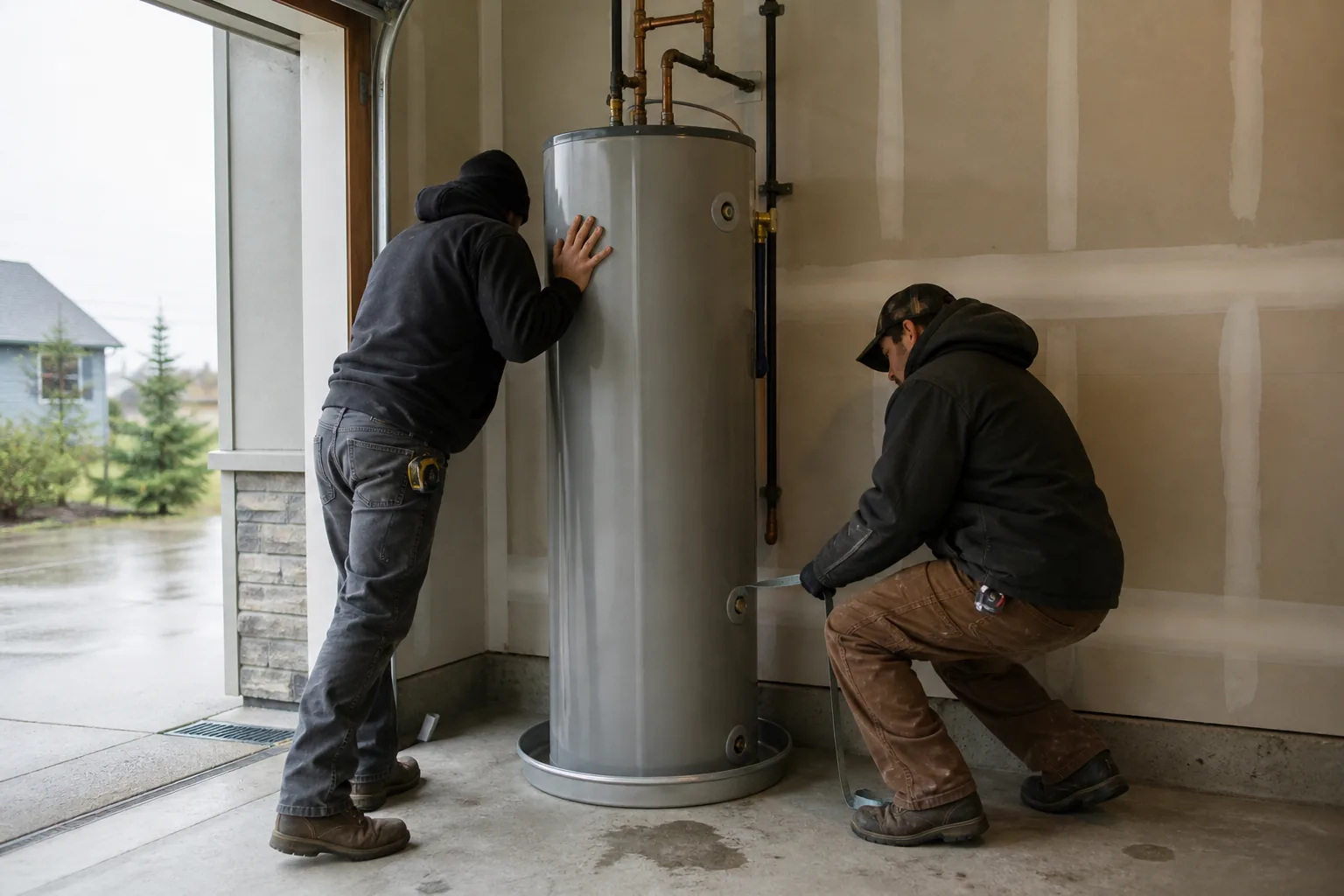
When repair no longer makes sense, water heater replacement in Everett is a bigger visit than most people expect. The plumber shuts off the water and gas or power, drains the old tank, disconnects the lines, and hauls the old unit away. Then the new tank is set in place, connected, and brought up to the code items that commonly apply in Washington: seismic strapping, an expansion tank where the system calls for one, and a properly routed T&P discharge line. The plumber will also tell you whether a permit is needed.
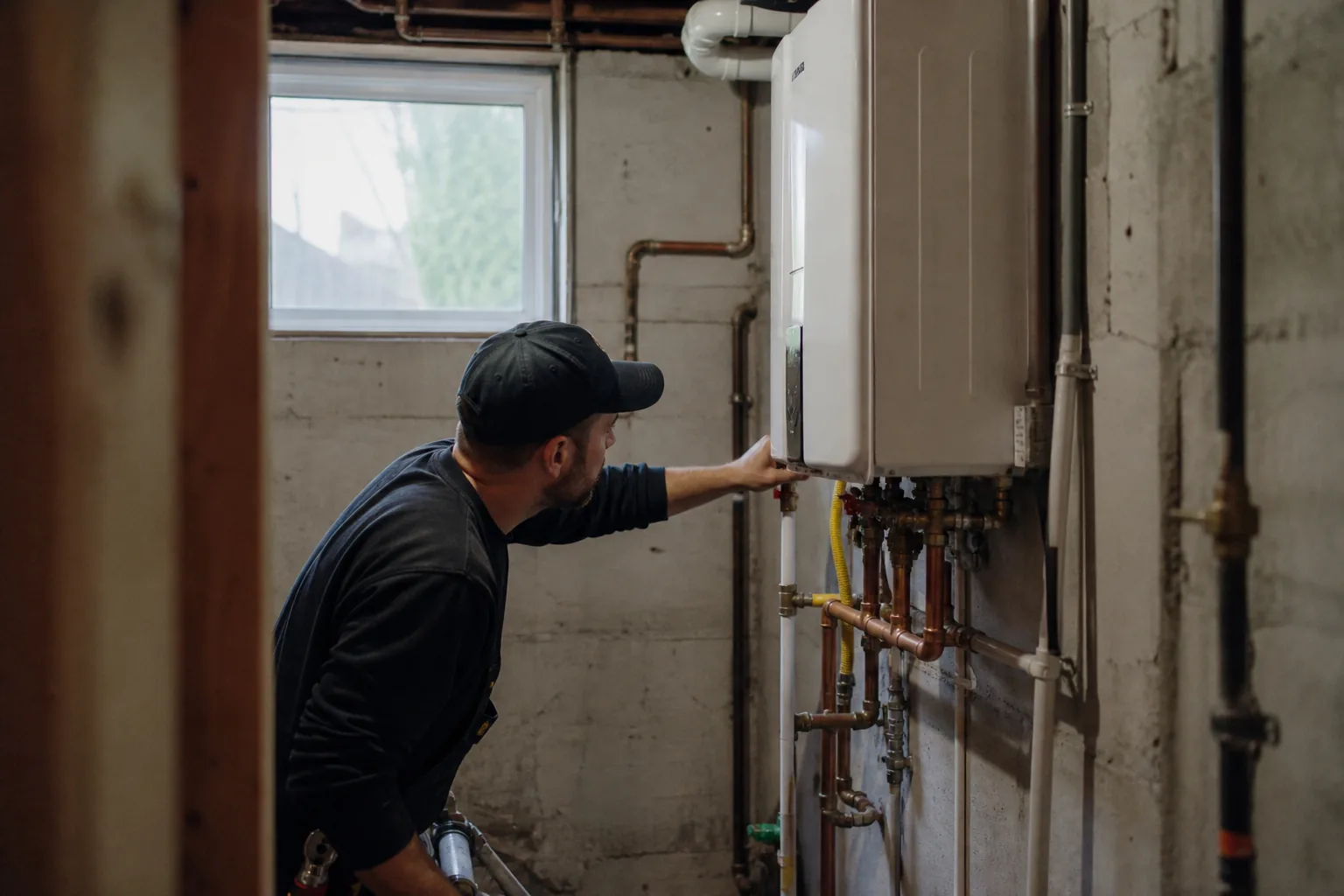
Water heater installation for a tankless unit is a larger job than swapping one tank for another. The gas line may need to be sized up, the unit needs correct venting, and there are electrical needs even on gas models. It is also mounted on a wall rather than set on the floor, so the location has to work.
A few answers make the first call go faster, and replacement usually beats repair when the tank is leaking, the unit is old, or the same heater keeps needing repairs.
- How many people live in the home and how much hot water you use at once
- Whether the unit runs on gas or electricity
- Where it sits: garage, closet, or crawlspace
- Whether the tank is leaking, how old it is, and how many repairs it has needed
Replacement, permits, and Everett/Snohomish County specifics
A water heater replacement in Washington generally needs a permit, and the new installation needs to meet current code: seismic strapping to keep the tank from tipping in an earthquake, a T&P discharge line routed correctly, and an expansion tank on closed systems where one is required. Ask the plumber whether a permit is needed for your job and who's pulling it.
Homes in North Everett, including Bayside, Port Gardner, and Northwest Everett, tend to be older, and a water heater there may sit on original galvanized supply lines or in a tight closet that limits what unit fits. In newer areas like Silver Lake or Mill Creek, tanks are usually more accessible but still due for an anode rod check past the 6 to 8 year mark. Everett's water, drawn from Spada Lake, is naturally soft, which helps tank longevity since scale buildup is slower here than in hard-water regions.
Tankless water heater repair in Everett
When a tankless unit fails, you usually see one of a few things: an error code on the display, water that swings between hot and cold, a unit that clicks and never lights, or hot water that comes out as a weak trickle. Each points somewhere different. Ignition failure often traces to the igniter, the flame sensor, or a gas supply or venting problem. Reduced flow usually means a clogged inlet filter or scale inside the heat exchanger. Water that goes hot and cold can come from a failing flow sensor, or from the unit shutting down mid-draw to protect itself.
Everett's soft Spada Lake water slows scale, but an older unit that has never been descaled can still build it up on the heat exchanger. The plumber will read the error code against the manufacturer's list, check and clean the inlet filter, test the flow sensor and igniter, and look at the vent and the gas supply before condemning the unit. If the code shows a venting or gas fault, leave the unit off and call. And if you're facing a tank replacement anyway, the plumber can talk through tankless as an option.
Before the plumber gets there
- If you smell gas, leave the gas valve alone, don't flip switches, and get out; call your gas utility's emergency line from outside
- If the tank is actively leaking, shut off the cold water supply valve at the top of the tank
- Turn off power to an electric unit at the breaker if you suspect an electrical fault
- Mop up standing water to limit damage to flooring, but don't try to open or drain the tank yourself
- Note the age and approximate size of the tank if you can find it, it helps the plumber prepare
How calling works
Call and describe the problem
Tell us what's leaking, clogged or not working, and roughly where you are in Everett or which nearby city.
We connect you with a local plumber
Your call goes to an independent plumbing contractor who works your area and handles that kind of job.
The plumber takes it from there
They talk through the problem, timing and price with you. Ask for a written estimate before work starts.
Where this service is available
One call to our Everett plumber line gets you help with your water heater across the city and these nearby areas. Pick yours for local details.
Everett neighborhoods
Common questions
How much does water heater repair cost in Everett?
It depends on the plumber, the part that failed, and the age and type of unit. A thermocouple or element replacement is generally less involved than diagnosing an intermittent gas valve issue. Ask the plumber for a written estimate before any work starts, since they're the one quoting the job.
Should I repair or replace my water heater?
It comes down to the age of the unit and where the failure is. A single failed part on a unit under 8 to 10 years old is usually repairable. A tank that's rusting or leaking from the bottom, or a unit already past its expected lifespan, usually isn't worth repairing. The plumber can walk you through what they found.
What does water heater replacement in Everett involve?
The plumber drains and removes the old unit, then sets a new one matched to your fuel type and size, with seismic strapping, a T&P discharge line, and an expansion tank where required. A permit is generally part of the job. The plumber quotes it after seeing your setup, since access, venting and piping vary from house to house.
Do I need a permit to replace a water heater in Everett?
Generally yes. Replacements typically need a permit and must meet current code, including seismic strapping and a properly routed T&P discharge line. Ask the plumber whether your job needs one and who's pulling it.
Why does my water heater make popping or rumbling noises?
That's usually sediment that's built up on the bottom of the tank, which traps water underneath and causes it to boil and pop as it's heated. It's worth having a plumber look at it, since heavy sediment buildup can shorten the life of the tank.
How do I know if a plumber I'm connected with is properly registered?
In Washington, plumbing contractors must be registered with the Department of Labor & Industries, and plumbers must hold an L&I plumbing certificate. You can ask for the L&I registration number and look it up yourself on L&I's Verify a Contractor tool.
Is tankless worth it for an Everett home?
It depends on your household's hot water use, your existing gas or electrical service, and your budget, since tankless units cost more to install than a like-for-like tank swap. A plumber can look at your setup and talk through whether it makes sense before you decide.
Question not covered here? Describe the problem on the phone.
Call (425) 845-0233Related plumbing problems
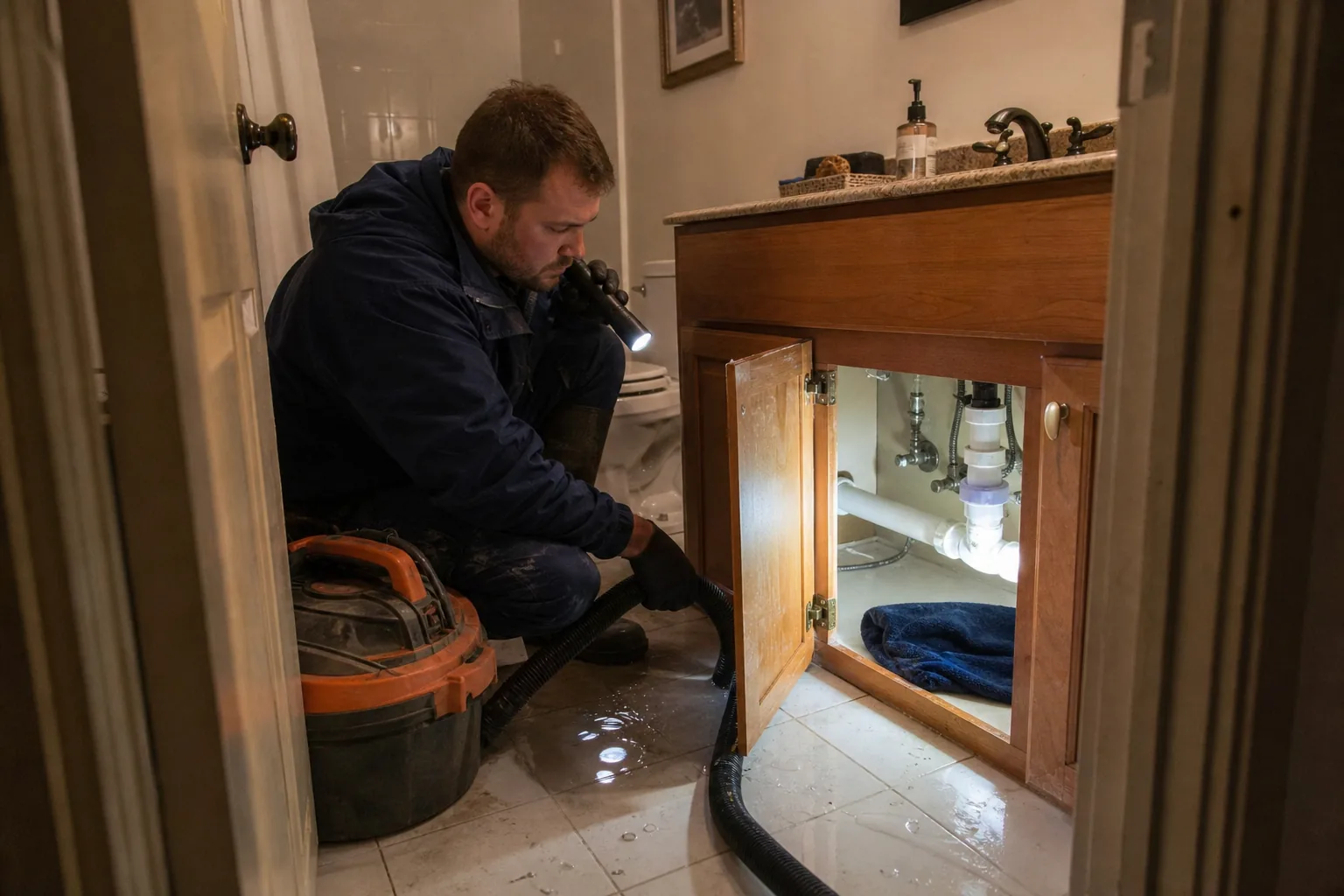
24/7 Emergency Plumbing
Burst pipe, sewage backup, or no water at all. Call any time, day or night, and we'll connect you with a local plumber.
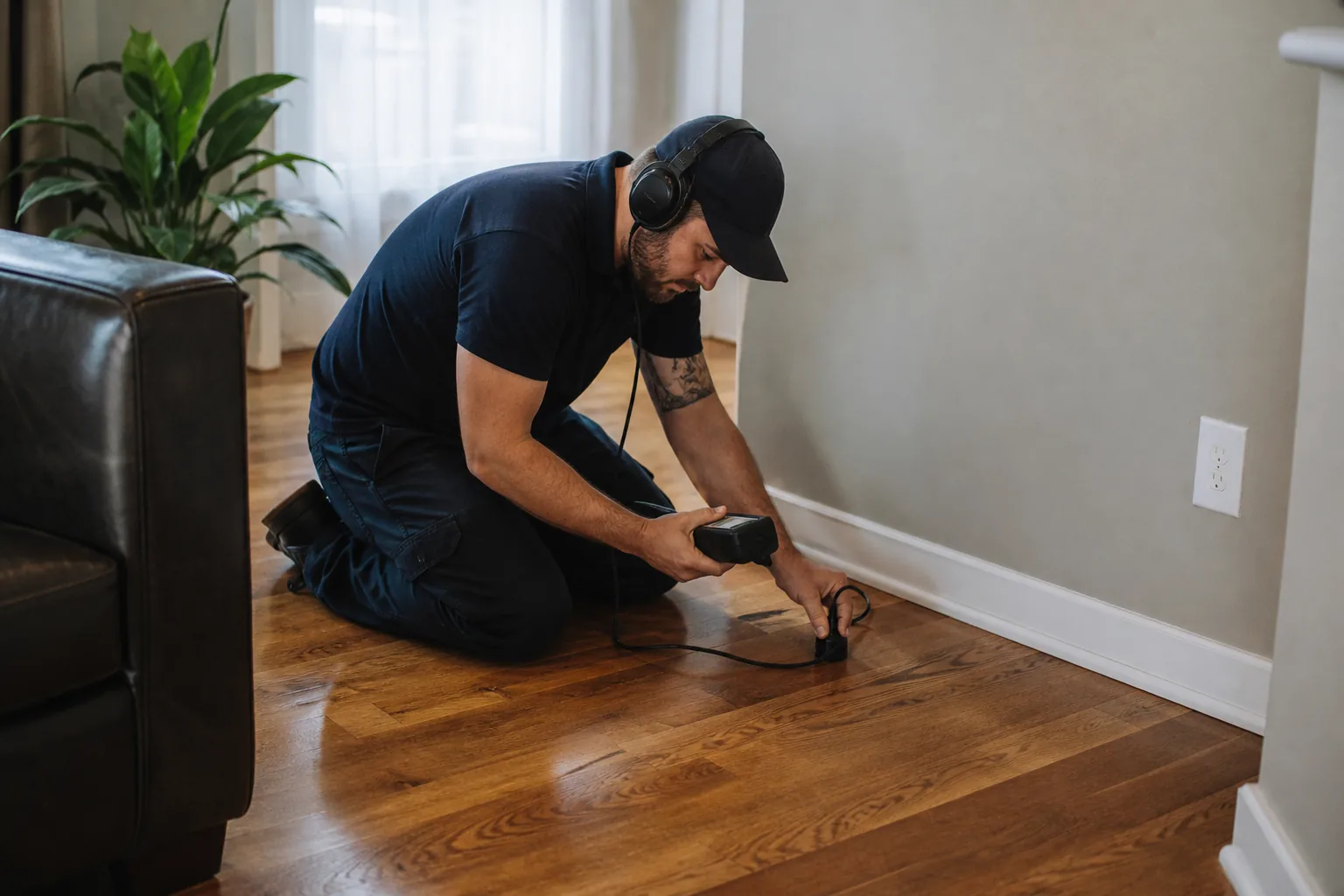
Leak Detection & Slab Leak Repair
High water bill, a damp spot with no obvious cause, or a slab leak. Call and we'll connect you with a local plumber.
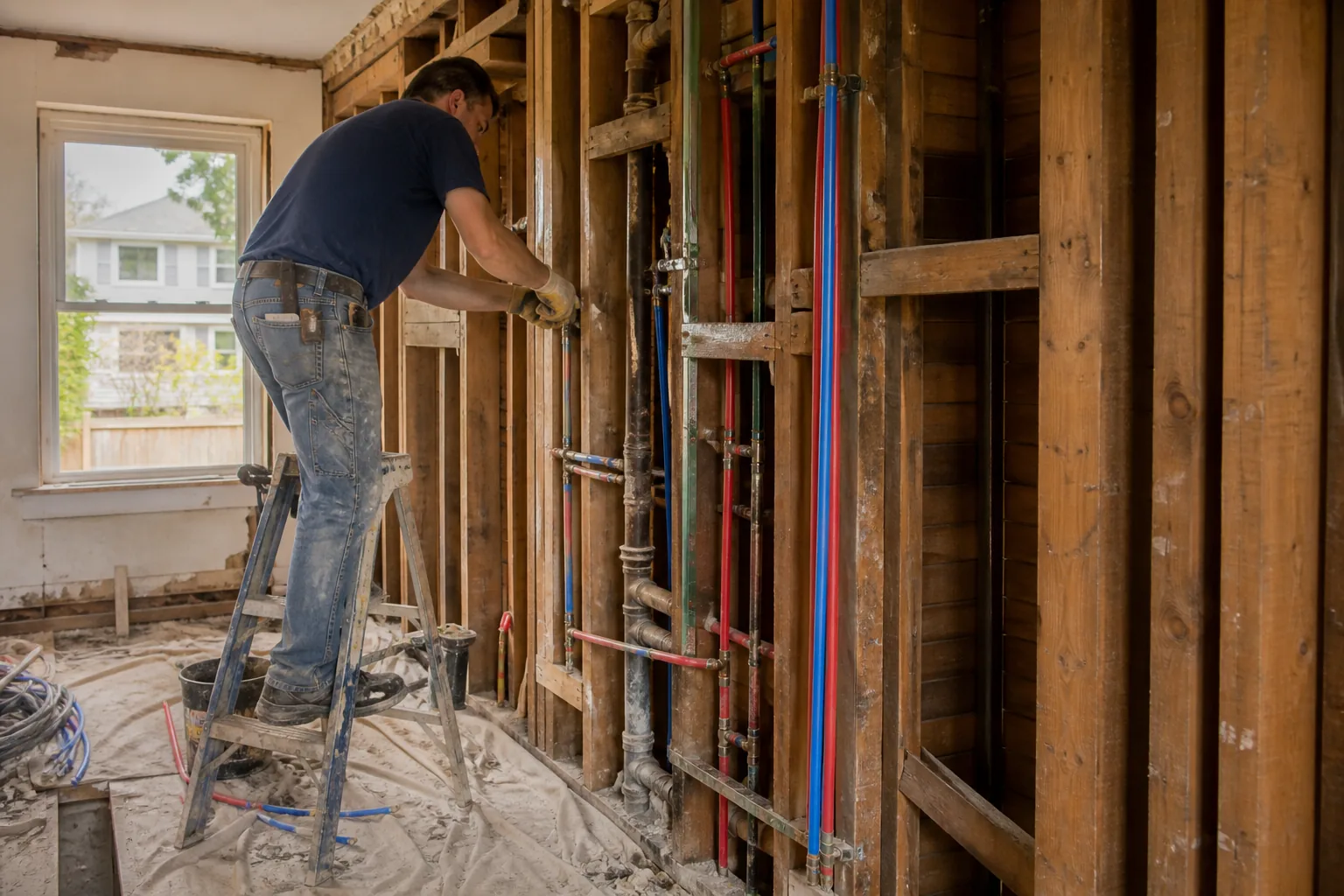
Whole-House Repiping
Rusty water, low pressure, or repeat pinhole leaks. Talk to a plumber about PEX or copper repiping for your house.
Call any time
Get connected with a local plumber
Whether it's no hot water, a leaking tank, or a unit that's just old and due, call (425) 845-0233 and describe what's happening. We'll connect you with a plumber who works on water heaters in your area.
Call (425) 845-0233Calls are connected to independent local plumbing contractors.