Phone answered 24/7
Water Line Repair & Replacement in Everett, WA
The pipe that brings water from the street to your house is called the service line, or water line, and most homeowners never think about it until something goes wrong underground where they can't see it. Water line replacement in Everett, WA usually starts with one of a few clues: a soggy patch of yard that never dries out, water pressure that's dropped inside the house, or a water bill that jumped without an obvious reason.
Call and describe what you're noticing. We'll connect you with a local plumber who can figure out whether the line needs a repair, a full replacement, and which method makes sense for your yard.
Call right away if
- Water is bubbling up through the yard or driveway
- You've lost water pressure suddenly, not gradually
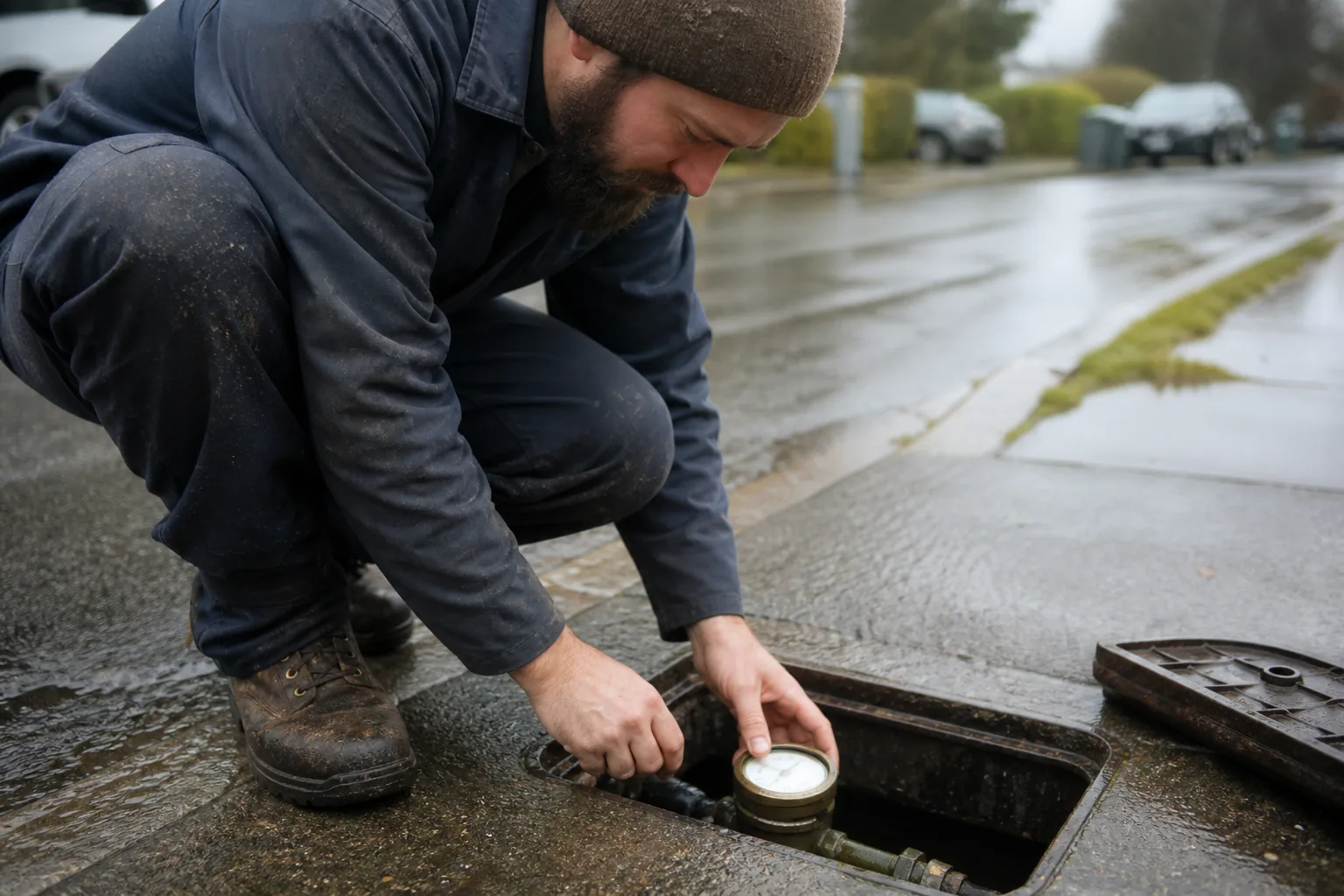
- Your water meter dial is spinning with every fixture in the house off
- A pipe has frozen and you suspect it's cracked
- Water is pooling near the meter box or foundation
What the water line actually is
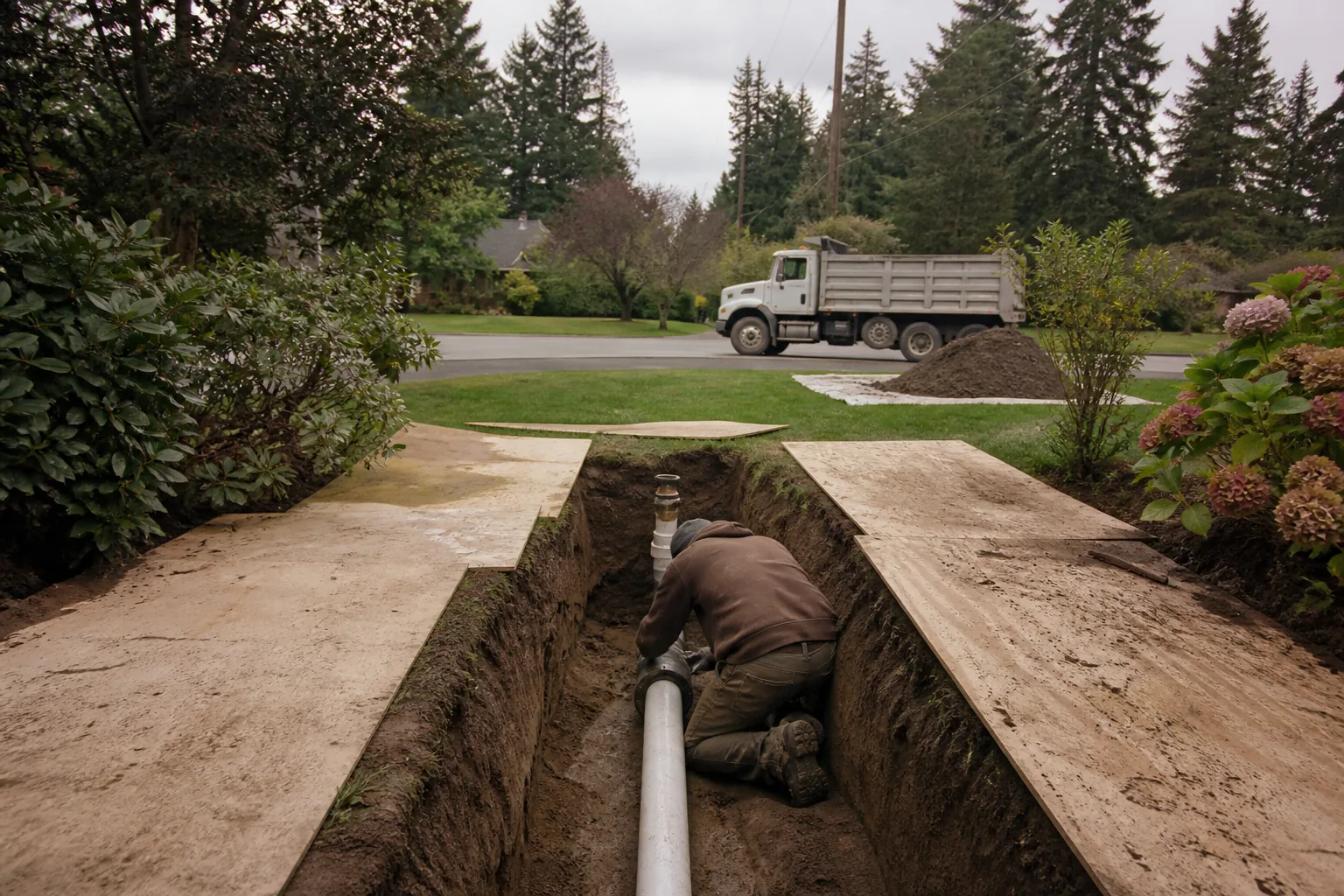
Everett's water utility owns and maintains the main line running under the street and the section up to your meter, which is usually near the sidewalk or property line. From that meter to your house, the pipe belongs to you. That stretch, whether it's twenty feet or two hundred, is the part a plumber is talking about when they mention your service line or water line.
Older sections of this line are sometimes galvanized steel or, in homes built between about 1978 and 1995, polybutylene. Both materials have known weak points after decades underground, and both are common reasons a plumber recommends replacement over another patch.
Signs your service line is failing
A wet spot in the yard that stays wet regardless of weather, especially one that tracks in a line from the meter toward the house, is one of the clearer signs. Grass that's unusually green over one strip of yard, a hissing sound near the meter, or a meter dial that keeps turning when every fixture in the house is off are all worth calling about.
Inside the house, a gradual drop in pressure over months can point to a line that's partially clogged with scale or corrosion. A sudden drop, especially paired with a wet yard, points more toward an active leak or a break.
Not sure if it can wait?
Describe what you're seeing and we'll connect you with a local plumber who can tell you how urgent it is.
Repair or full replacement: how a plumber decides
A single, isolated break in an otherwise sound line, especially in a newer pipe, might just need a repair at that one spot. A plumber will usually want to see the pipe's age, material, and condition before recommending anything bigger.
Older galvanized or polybutylene lines that have already had one failure are a different story. Once corrosion or brittle fittings show up in one place, the rest of the line is usually close behind, and a plumber will often recommend replacing the whole run rather than chasing leaks one at a time over the next few years.
Ask the plumber to explain what they found and why they're recommending repair versus replacement before you agree to either.
Trenchless replacement vs open trench
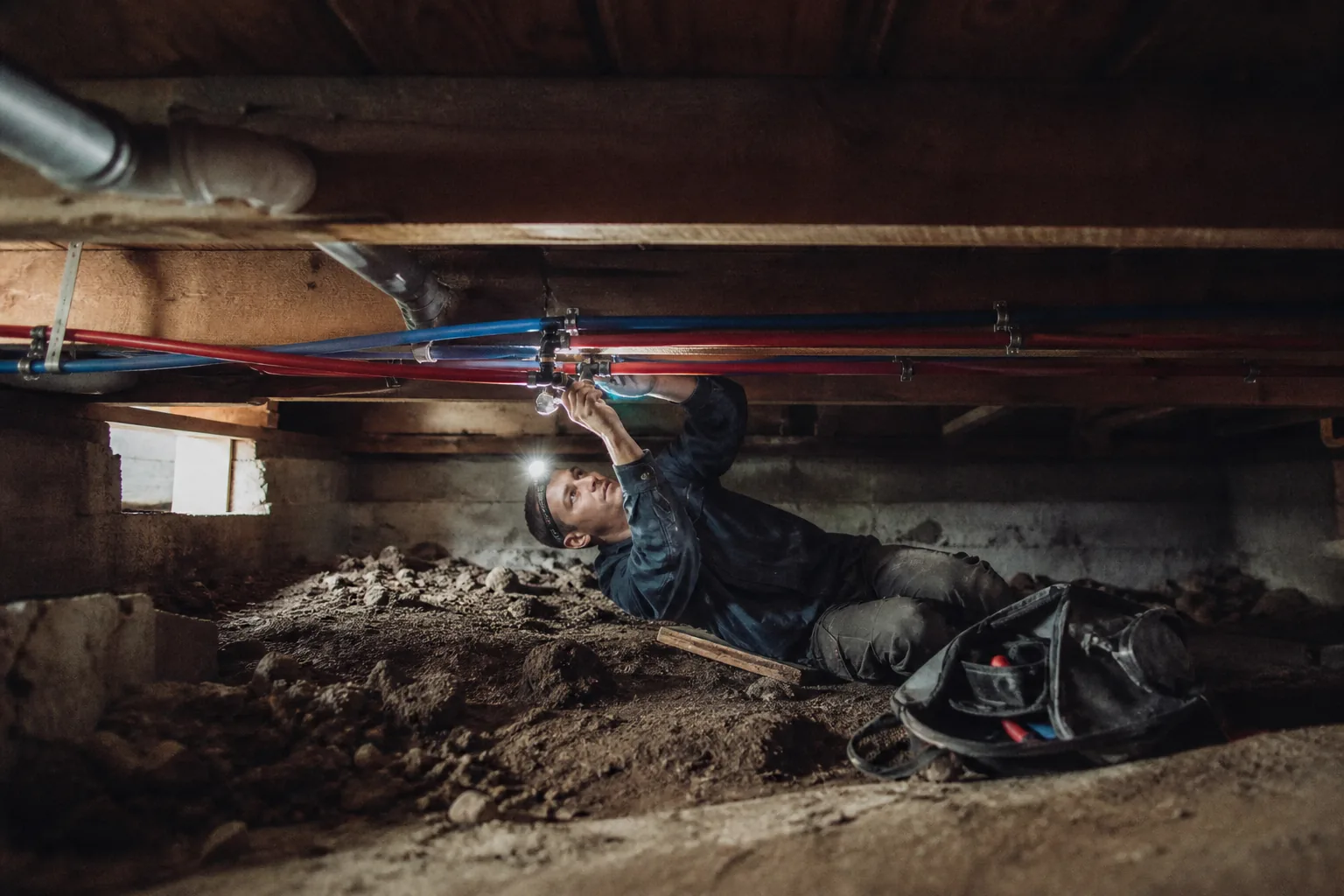
Trenchless methods, sometimes called pipe bursting or directional boring, pull a new line through roughly the same path as the old one using a small entry and exit pit instead of digging up the whole yard. It's often the better fit when the existing path is straight enough and there's no obstruction like a tree root system directly in the way, and it generally leaves less landscaping to repair afterward.
Open trench digging is still sometimes the right call, particularly when the line needs to be rerouted, when there's already other utility work happening in the same area, or when the ground conditions don't suit trenchless equipment. A plumber can look at your yard and explain which method fits, and what each one means for your landscaping, driveway, or any structures near the line's path.
Talk it through with a plumber
The line is answered 24/7. Tell us your neighborhood or city and what's going on.
Pressure-reducing valves and water pressure
Not every pressure problem is the service line itself. A pressure-reducing valve, or PRV, sits where the line enters the house and controls how much city water pressure actually reaches your fixtures. A PRV that's failing can cause pressure that's too low throughout the house, or in some cases too high, which stresses fittings and water heaters over time.
If a plumber checks your service line and finds it in reasonable shape but pressure is still off, ask them to check the PRV next. It's a smaller, less disruptive fix than replacing the line, when that's actually where the problem is.
Freeze risk in Everett winters
Everett gets a handful of freezing nights most winters and occasionally a longer cold snap. Service lines are usually buried below the frost line and aren't the most common freeze point, but the section closest to the meter, along with any exposed pipe near a crawlspace, garage, or exterior wall, is more exposed. If you've had a frozen pipe before, mention it to the plumber. It can point to where insulation is thin or a line runs closer to the surface than it should.
Before the plumber gets there
- Locate your water meter and note whether the dial moves with everything off
- Find your main shutoff valve in case you need to stop water to the house
- Note where in the yard the wet area or sound is coming from
- Check a recent water bill for a sudden jump in usage
- Avoid digging near the suspected leak yourself; let the plumber assess it first
How calling works
Call and describe the problem
Tell us what's leaking, clogged or not working, and roughly where you are in Everett or which nearby city.
We connect you with a local plumber
Your call goes to an independent plumbing contractor who works your area and handles that kind of job.
The plumber takes it from there
They talk through the problem, timing and price with you. Ask for a written estimate before work starts.
Where this service is available
One call to our Everett plumber line gets you help with your water line across the city and these nearby areas. Pick yours for local details.
Everett neighborhoods
Common questions
How do I know if my water line is leaking underground?
A wet or unusually green patch of yard, a hissing sound near the meter, or a meter dial that spins with every fixture off are the clearest signs. A gradual drop in indoor water pressure over weeks or months can also point to a partial blockage or slow leak in the line.
What does water line replacement cost?
Cost depends on the plumber, the length and depth of the line, the material used, and whether trenchless or open trench methods are used. Ask for a written estimate that spells out the method and scope before agreeing to anything.
Is trenchless replacement always better than digging a trench?
Not always. Trenchless works well for a fairly straight run with no major obstructions and tends to disturb less landscaping. An open trench may still be the right call for a rerouted line or difficult ground conditions.
Who's responsible for the line from the meter to my house?
The homeowner generally owns and maintains the section from the meter to the house, while the utility maintains the main line under the street up to the meter. A plumber can confirm exactly where that boundary sits on your property.
Can low water pressure be fixed without replacing the whole line?
Sometimes. A failing pressure-reducing valve can cause pressure problems even when the service line itself is fine. It's worth having a plumber check the PRV before assuming the line needs full replacement.
How can I check that the plumber is properly registered?
Washington requires plumbing contractors to be registered with the Department of Labor & Industries and plumbers to hold an L&I plumbing certificate. Ask for the L&I registration number and verify it through L&I's Verify a Contractor tool.
Question not covered here? Describe the problem on the phone.
Call (425) 845-0233Related plumbing problems
Leak Detection & Slab Leak Repair
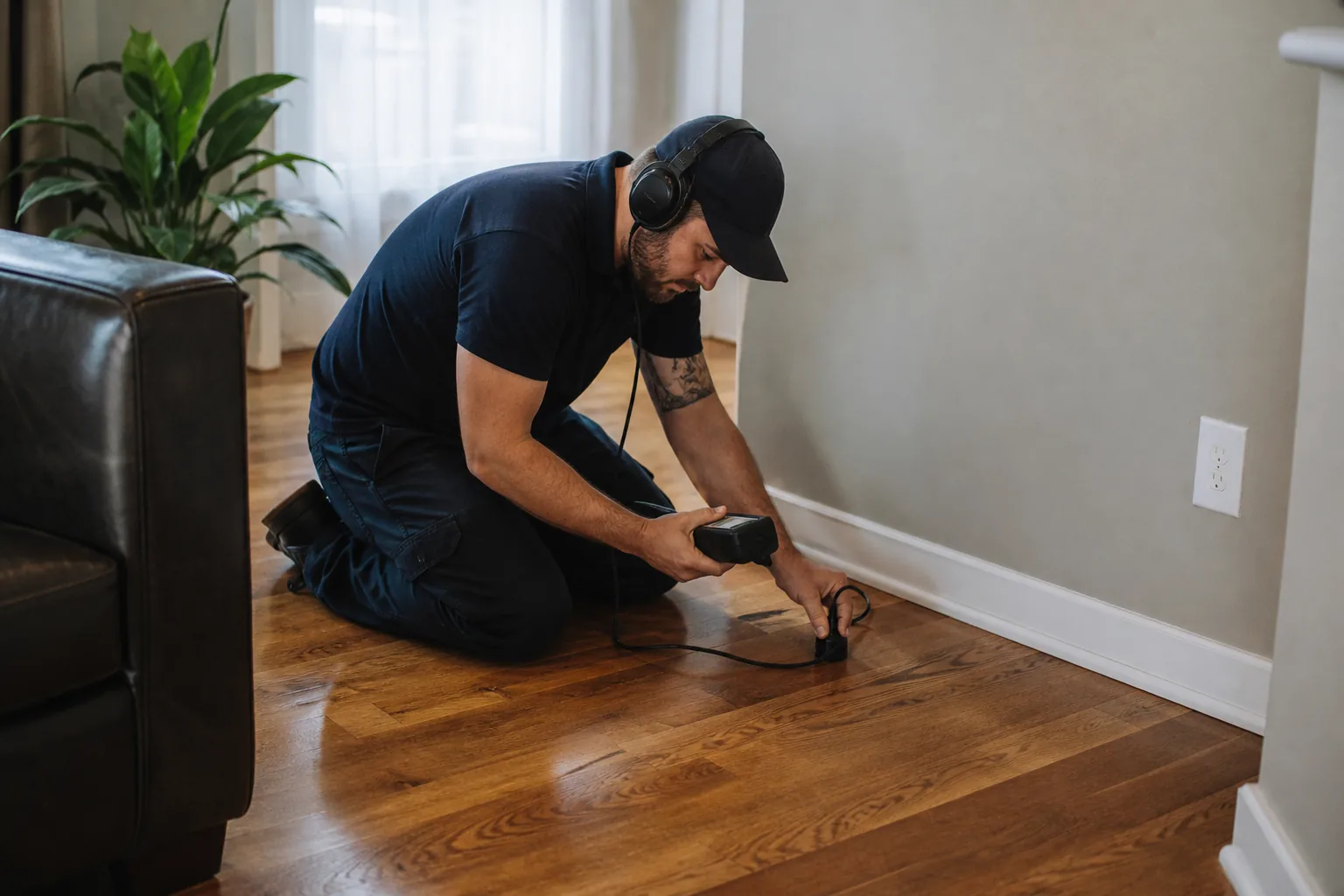
High water bill, a damp spot with no obvious cause, or a slab leak. Call and we'll connect you with a local plumber.
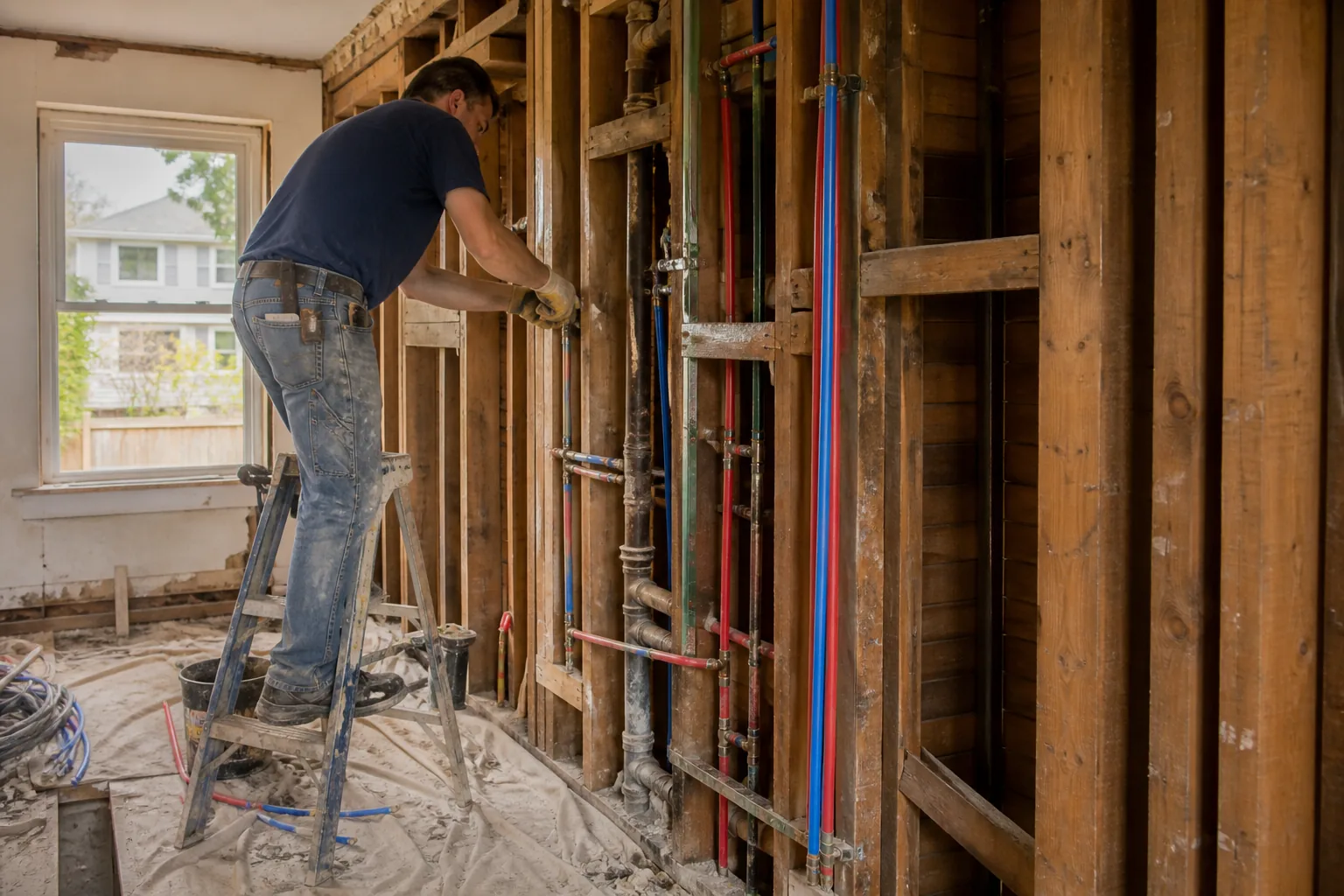
Whole-House Repiping
Rusty water, low pressure, or repeat pinhole leaks. Talk to a plumber about PEX or copper repiping for your house.
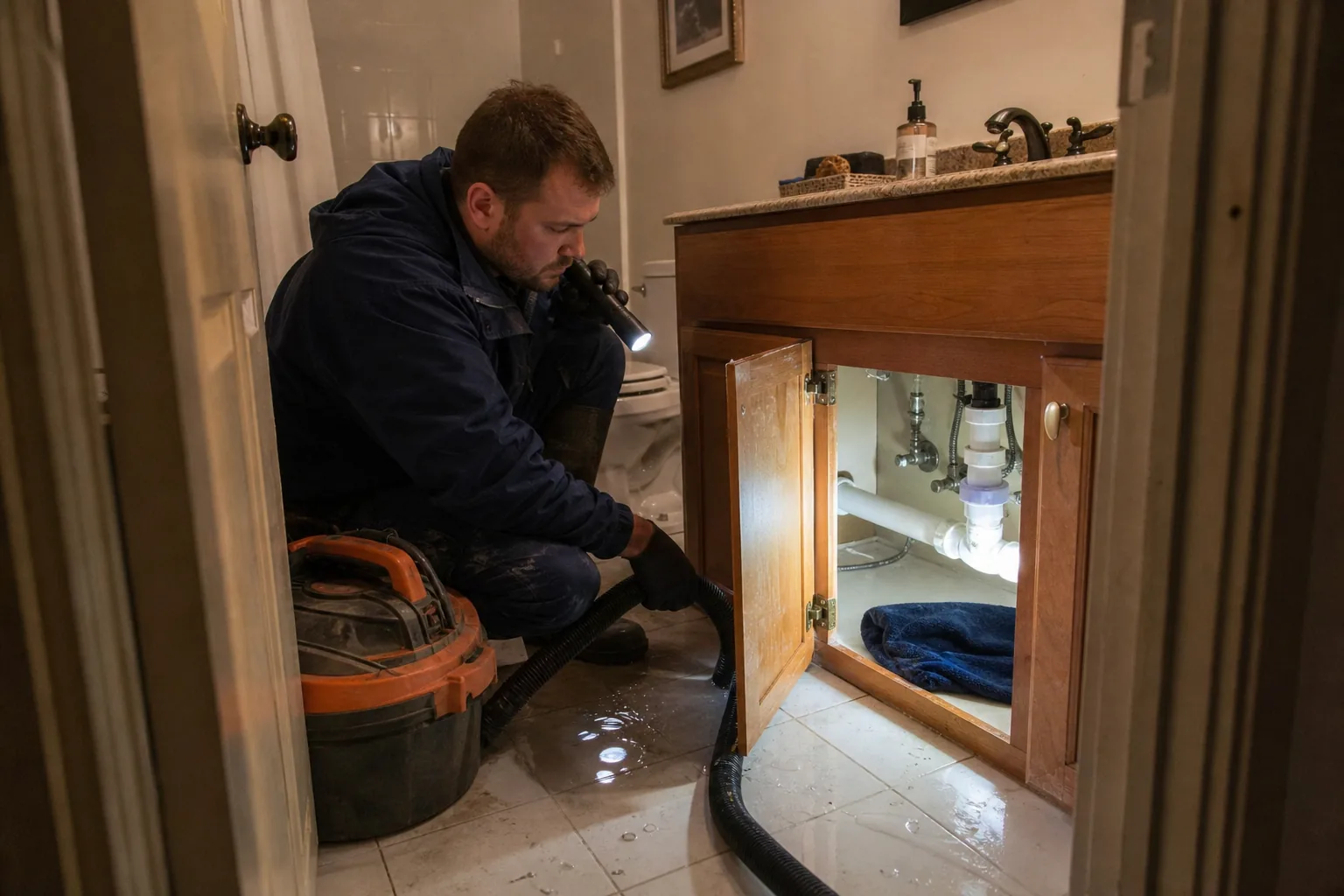
24/7 Emergency Plumbing
Burst pipe, sewage backup, or no water at all. Call any time, day or night, and we'll connect you with a local plumber.
Related guides
Call any time
Notice a wet spot or lost pressure?
Call (425) 845-0233 and tell us what you're seeing in the yard or inside the house. We'll connect you with a local plumber who can find out what's happening with your water line and what it'll take to fix it.
Call (425) 845-0233Calls are connected to independent local plumbing contractors.